SPIMUN Logo

Program of events and locations

Program of Events 2026

The 30th Anniversary SPIMUN Conference will take place on March 30-31, 2026.


Monday, March 30

09.30 - 10.00 - Registration

10.00 - 12.00 - Opening Ceremony

12.00 - 13.15 - Break

13.15 - 14.00 - Training sessions in the committees

14.00 - 17.00 - Lobbying in the committees

15.30 - 17.00 - Approval Panel at work

Tuesday, March 31

10.00 - 13.00 - Committee sessions

13.00 - 14.00 - Break

14.00 - 16.45 - Committee sessions

16.45 - 17.30 - Break

17.30 - 18.30 - Closing ceremony

Venue:

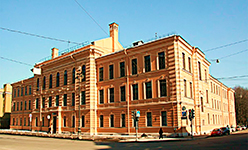
Conference events will take place at the Gymnasium 157 named after the princess of Oldenburg (St. Petersburg, Lafonskaya street, 1)

References

Уважаемые организаторы конференции,

Жаль, что раньше у меня не было возможности поблагодарить вас за все усилия, которые Вы и Ваши коллеги предприняли для конференции. Наши школьники провели сказочное время на конференции, и у всех нас остались теплые воспоминания и неоценимый опыт. Вы все проделали огромную работу, чтобы все школьники и учителя ощутили, что о них  заботятся, и мы надеемся, что скоро вернемся, чтобы вновь присоединиться к вашей конференции.

Хелен Сомервилл

El Alsson British and American International School, Каир, Египет 


Уважаемые Наталья и Игорь,

Я хотела бы поблагодарить вас еще раз за прекрасное время, проведенное в Санкт- Петербурге. Вы были очень добры и помогли нам (учителям и школьникам) чувствовать себя непринужденно. Мои ученики  очень признательны своим гостеприимным русским хозяевам. Поэтому я думаю, что этот опыт расширил сознание и открыл их сердца. Спасибо всем еще раз. Я надеюсь приехать и в следующем году.

Франка Монзеглио

IISS Einaudi Casaregis Galilei, Генуя, Италия   


Уважаемые участники Организационного комитета «Модели ООН»,

Я хотел бы еще раз поблагодарить вас за такую замечательную конференцию, а также за ваше гостеприимство и помощь во всем. Я также хотел бы поблагодарить вас за то, что приняли моих учеников, не слишком опытных для участия в такой сложной программе. Однако, я должен сказать, что они многому научились за эти 4 дня конференции и теперь рассказывают своим друзьям о вашей «Модели ООН».  Это убеждает меня в том, что мы приедем снова в следующем году.

Вы заслуживаете самых добрых слов,

Спасибо большое,

Эрдем Зейрек,

Dogus Anatolian High School, Стамбул, Турция 

ECOSOC

The question of economical, humanitarian and technical aid after nuclear disaster  

Introduction.

 Nowadays nuclear industry is a great part of all of the world processes. Nuclear manufactures produce energy- which is consumed by millions of people. The useful impact of that sphere is really huge, the another question is what to do, If the system goes wrong, if any kind of disaster can take place nearby the city you live- it means total radiation infection and dead of thousands of people.  So, one of the aims of the ECOSOC committee in Spimun 2012 is to create a clear plan of actions in that case. And that means - economical, humanitarian and technical aid after nuclear disasters.

A nuclear and radiation accident is defined by the International Atomic Energy Agency as "an event that has led to significant consequences to people, the environment or the facility. Examples include lethal effects to individuals, large radioactivity release to the environment, or reactor core melt. 

History:

This question has been discussed since the first nuclear reactors have been constructed. It has also been a key factor in public concern about nuclear facilities. Some technical measures to reduce the risk of accidents or to minimize the amount of radioactivity released to the environment have been adopted.  But despite this, today we have got terrible samples of ineffective measures after nuclear disasters. Here are the most dangerous nuclear accidents ever.

Japan

The earthquake that shook on March 11, 2011, stirred up a devastating tsunami that blasted coastal cities with walls of water, shifted the Earth’s axis and has been blamed for thousands of deaths. It also triggered what many are calling the worst disaster of its kind since the incident at Chernobyl, a virtual byword for the risks that come with harnessing nuclear energy. As experts scramble to stem the mounting crisis in Japan, we take a look at four of the most devastating nuclear accidents to date

Chernobyl (April 26, 1986)

Built in the late 1970s about 65 miles north of Kiev in the Ukraine, the Chernobyl plant was one of the largest and oldest nuclear power plants in the world. The explosion and subsequent meltdown that occurred there in April 1986 would claim thousands of lives cause countless birth defects and unleash a thyroid cancer epidemic on the region. However, it would take years for the full story behind the catastrophe to emerge. A bungled experiment at one of the facility’s four reactors created a sudden power surge, which in turn led to a series of blasts that blew the 1,000-ton steel top off of the reactor. A lethal cloud of radioactive material gathered over the nearby town of Pripyat—which was not evacuated until 36 hours after the explosion—before wafting over large parts of Europe. Soviet officials tried to keep the disaster under wraps, but on April 28 Swedish radiation monitoring stations located more than 800 miles from Chernobyl reported radiation levels 40 percent higher than normal.

In the opening days of the crisis, 32 people died at Chernobyl and dozens more suffered radiation burns. The radiation that escaped into the atmosphere–equivalent to several times that produced by the atomic bombs dropped on Hiroshima and Nagasaki–contaminated millions of acres of forest and farmland. The full human toll from the calamity is still being tallied, but experts believe that thousands of people died and as many as 70,000 suffered severe poisoning. In addition, a large area of land may not be livable for as much as 150 years, including the 18-mile radius around Chernobyl–home to some 150,000 people who had to be permanently relocated. In 2000, the last working reactors at Chernobyl were shut down and the plant was officially closed.

Kyshtym (September 29, 1957)

In the years following World War II, the Soviet Union constructed dozens of covert facilities—many of them hastily and shoddily built—in an effort to strengthen their nuclear arsenal. One of these, the Mayak nuclear fuel processing plant in the Russian town of Ozyorsk, became the site of a major disaster when the cooling system in a waste storage tank failed, causing the dried radioactive material it contained to overheat and explode. A plume of deadly particles swelled above Ozyorsk and the surrounding region, eventually spanning some 300 square miles. A full week passed before the affected zone’s 10,000 residents were evacuated; because the plant was shrouded in secrecy, they received no explanation for their abrupt and permanent resettlement. By that time, reports had surfaced of mysterious ailments, including people’s skin sloughing off from exposed body parts.

Instead of acknowledging what had happened in the disaster’s aftermath, the Soviet government created the East-Ural Nature Reserve in the contaminated area and prohibited unauthorized access to it. In 1979, the Russian biologist and dissident Zhores Medvedev made waves by exposing the accident’s lasting effects, but it was not until 1990 that reports documenting the event were declassified. According to estimates, 200 people died of cancer because of exposure to radiation, and thousands more may have suffered from related illnesses. The Mayak incident has come to be associated with the nearby town of Kyshtym because Ozyorsk did not appear on any official maps at the time.

Three Mile Island (March 28, 1979)

The most serious nuclear accident in U.S. history took place at the Three Mile Island plant near Harrisburg, Pennsylvania, a brand-new facility lauded for its state-of-the-art design, efficiency and affordability during an era of energy crises. It began when a pressure valve in one of the reactors failed to close, allowing cooling water–contaminated with radiation–to drain into adjoining buildings. Control room operators made critical errors as they struggled to contain the crisis, and by early morning the core had heated to over 4,000 degrees–just 1,000 degrees short of meltdown. As radioactive steam began pouring out of the plant, word of the incident leaked to the outside world. The plant’s parent company downplayed the event, claiming that no radiation had been detected off plant grounds, but within days radiation levels were elevated over a four-county zone. Pennsylvania Governor Richard Thornburgh ordered the evacuation of pregnant women and small children from the area.

On March 31, plant workers were able to address the problems and ended the threat of a meltdown. Although no deaths or injuries were reported, there has been an ongoing controversy over whether the radiation released at Three Mile Island led to increased cancer and infant mortality rates in the region. The incident also eroded the American public’s faith in nuclear power, inspiring many demonstrations, and increased awareness of the need for emergency preparedness at the state and local levels.

Windscale (October 10, 1957)

Designed to produce plutonium and other materials for the country’s burgeoning nuclear weapons program, Britain’s first nuclear reactor, known as Windscale, was built in northwest England in the late 1940s. On October 10, 1957, workers conducting standard maintenance at the massive facility noticed rising temperatures. Upon further inspection, they discovered that the reactor’s uranium-filled graphite core had caught fire. Worse, it had likely been ablaze for two days, releasing dangerous contaminants into the atmosphere. With the reactor on the verge of collapse, plant operators risked their lives to fight the flames with cooling fans, carbon dioxide and water. The fire finally died out on October 12, but by that time a radioactive cloud was already spreading across the United Kingdom and Europe.

While no evacuations occurred, officials prohibited the sale of milk from the affected area for roughly a month. Scientists estimate that, over the long term, radioactive fallout from the Windscale fire may have caused some 240 cases of cancer. An inquiry that began within days of the accident concluded that the blaze had been both avoidable and mishandled. The complete report was suppressed for several decades, however, in part because it may have compromised Britain’s efforts to cooperate with the United States on nuclear weapons development.

Organizations:

IAEA- International Atomic Energy Agency.

The IAEA is the world's center of cooperation in the nuclear field. It was set up as the world?s "Atoms for Peace" organization in 1957 within the United Nations family. The Agency works with its Member States and multiple partners worldwide to promote safe, secure and peaceful nuclear technologies. (Learn more about the IAEA in this video).

Organizational Profile

The IAEA Secretariat is headquartered at the Vienna International Centre in Vienna, Austria. Operational liaison and regional offices are located in Geneva, Switzerland; New York, USA; Toronto, Canada; and Tokyo, Japan. The IAEA runs or supports research centers and scientific laboratories in Vienna and Seibersdorf, Austria; Monaco; and Trieste, Italy.

The IAEA Secretariat is a team of 2300 multi-disciplinary professional and support staff from more than 100 countries. The Agency is led by Director General Yukiya Amano and six Deputy Directors General who head the major departments.

IAEA programmes and budgets are set through decisions of its policymaking bodies - the 35-member Board of Governors and the General Conference of all Member States. Reports on IAEA activities are submitted periodically or as cases warrant to the UN Security Council and UN General Assembly

IAEA financial resources include the regular budget and voluntary contributions. The annual regular budget is set by the General Conference, as well as extradbudgetary funds and voluntary contributions to the Technical Co-operation Fund. (These figures are published in the latest IAEA Annual Report).

IAEA Mission & Programmes

The IAEA's mission is guided by the interests and needs of Member States, strategic plans and the vision embodied in the IAEA Statute. Three main pillars - or areas of work - underpin the IAEA's mission: Safety and Security; Science and Technology; and Safeguards and Verification.

Relationship with United Nations

As an independent international organization related to the United Nations system, the IAEA?s relationship with the UN is regulated by special agreement. In terms of its Statute, the IAEA reports annually to the UN General Assembly and, when appropriate, to the Security Council regarding non-compliance by States with their safeguards obligations as well as on matters relating to international peace and security.

The European Organization for Nuclear Research (French: Organisation europeenne pour la recherche nucleaire), known as CERN is an international organization whose purpose is to operate the world's largest particle physics laboratory, which is situated in the northwest suburbs of Geneva on the Franco–Swiss border . Established in 1954, the organization has twenty European member states.

The term CERN is also used to refer to the laboratory itself, which employs just under 2400 full-time employees/workers, as well as some 7931 scientists and engineers representing 608 universities and research facilities and 113 nationalities.

CERN's main function is to provide the particle accelerators and other infrastructure needed for high-energy physics research. Numerous experiments have been constructed at CERN by international collaborations to make use of them. It is also the birthplace of the World Wide Web. The main site at Meyrin  also has a large computer centre containing very powerful data-processing facilities primarily for experimental data analysis and, because of the need to make them available to researchers elsewhere, has historically been a major wide area networking hub.

The CERN sites, as an international facility, are officially under neither Swiss nor French jurisdiction. Member states' contributions to CERN for the year 2008 totaled CHF 1 billion (approximately ? 664 million).

Documents:

The Convention on Assistance in Case of a Nuclear Accident or Radiological Emergency and the Convention on Early Notification of a Nuclear Accident (Emergency Conventions) are the prime legal instruments that establish an international framework to facilitate the exchange of information and the prompt provision of assistance in the event of a nuclear accident or radiological emergency. They place specific obligations on the Parties and the IAEA, with the aim of minimizing consequences for health, property and the environment. more

Convention on Early Notification of a Nuclear Accident

This Convention aims to strengthen international co-operation in order to provide relevant information about nuclear accidents as early as necessary in order that transboundary radiological consequences can be minimized. States Party commit that, in the event of a nuclear accident that may have transboundary radiological consequences, they will notify countries that may be affected and the IAEA, and provide relevant information on the development of the accident The IAEA in turn forthwith informs States Parties, Member States, other States that may be physically affected and relevant international organizations of a notification received and promptly provides other information on request. Each State Party and the Agency have identified 24-hour warning points to which a notification can be directed, as well ascompetent authorities who are authorized to send notifications and verify information provided. The Agency maintains an up-to-date list of such authorities and warning points and provides it to States Parties, Member States and relevant international organizations. latest status

Convention on Assistance in the Case of a Nuclear Accident or Radiological Emergency

This Convention requires that States Parties cooperate between themselves and with the IAEA to facilitate prompt assistance in the event of a nuclear accident or radiological emergency to minimize its consequences and to protect life, property and the environment from the effects of radioactive releases. The IAEA is charged with using its best endeavours to promote, facilitate and support the cooperation between the States Parties. In the event of a nuclear accident or radiological emergency, the IAEA’s functions are to: make available to a State Party or a Member State requesting assistance appropriate resources for the purpose of conducting an initial assessment of the accident; transmit requests for assistance and relevant information to States Parties that may possess the necessary resources; offer its good offices to the States Parties or Member States; liaise with relevant international organizations to obtain and exchange relevant information; and, on request, co-ordinate the assistance at the international level that becomes available. Each State Party and the Agency have identified 24-hour warning points to which a request for assistance can be directed, as well as Competent Authorities who are authorized to send requests and to arrange for the provision of assistance. The Agency maintains an up-to-date list of such authorities and warning points and provides it to States Parties, Member States and relevant international organizations. latest status

Possible solutions:

In this situation, the delegate should search, which exactly measures have been accepted and to propose something new, in order to develop the aid system. Whether it will be just using a ready plan of some country, or whether it will be a new, fresh and up-to-date plan. Whether it would be cooperation with some international organizations, or whether each country should have its own methods. Whether you delegates will follow the opinion of experienced countries, or whether you will move your own opinion- is your chose, is the chose of all the delegates of the Ecosoc 2012.

Links:


SPIMUN Security Council rules of procedure

1. The Security Council (SC) consists of 15 delegates, 2 Chairs and Secretary. Every member state is represented by one delegate;
2. Every UN member state affected with the matter under the SC consideration should be invited to have its representative at the appropriate session and participate in it without vote;
3. The SC quorum is provided with presence of all 15 delegates;
4. Each SC member state has one vote, the affirmative decision is taken by votes of at least 9 SC member states;
5. The five permanent members of the SC should take unanimous decisions on the issues under consideration (except procedural ones). Implementation of Article 27 of the UN Charter is regulated by unanimous decision of SC officers, who shall take into consideration real-life status of the problem;
6. The SC Chairs and Secretary are independent officials representing the interests of the world community. Chairs may take any procedural decision if they feel it will make debates more efficient. All their decisions must be unanimous. The only priority of the acting Chair is giving the floor;
7. The Chairs
            a. open the sessions of the SC;
            b. propose a draft of the SC agenda;
            c. set the debate time on the issues;
            d. give the floor to the members of the house;
            e. facilitate the debates;
            f. set and announce the voting procedures;
            g. announce the voting procedures on main motions and amendments;
            h. cannot propose decisions of the discussed matters;
             i. have no voting right;
8. The Secretary
            a. formulates the final text of every discussed clause or amendment and reads it to the house before voting;
            b. accumulates and writes down the complete text of the discussed resolution and gives it to the house;
            c. warns the delegates about contradictions between adopted and discussed clauses of the resolution;
           d. mediates between the sides of the discussion during the lobbying time;
9. The SC session considers first the resolution (clause) draft or amendment:
           a. submitted or seconded by more SC member states than the others;
           b. selected by the unanimous decision of 2 Chairs and Secretary based upon priority and contents of the proposed draft
10. The SC agenda may be added or amended at the first session of the SC session with at least 9 votes of the SC members. Representatives of SC member state may propose any relevant question to discuss after all items of the Agenda have been considered under the same conditions 
11. SC resolutions are normally accumulated in the course of consideration, preambles are normally composed after the operative part is agreed;
12. Any motion or amendment on the discussed matter are presented to the house in written form (on paper or blackboard);
13. If the first discussed motion passes, other motions on the same issue may be considered only if all other questions are discussed;
14. After all the clauses are discussed and adopted the Chair sets time to discuss the resolution as a whole in order to arrange the adopted clauses in the appropriate order and to eliminate minor contradictions;
15. After all the issues of Agenda have been discussed, SC may consider resolutions adopted by other committees and demanding SC Sanction under Article 11, point 2 of the UN Charter. SC will recommend the resolutions to be discussed during the General Assembly Plenary Session.

Lobbying & Processing resolutions

1. Lobbying

The conference process begins in the lobbying with informal discussions among delegates from different nations. It is during this period that draft resolutions are changed, merged with others, or perhaps even discarded, because the delegate has accepted another resolution. The resolution the delegate brings with him must be seen only as a draft document, which is to serve as a basis for negotiation in the lobbying, where delegates will compare resolutions and exchange views on issues. Delegates cannot expect to approve their resolutions without the following number of co-submitters: GA Commissions - 15; ECOSOC - 10; Special Conference - 10.

2. The procedure for processing resolutions through the Approval Panel 

1. Discuss your draft resolution with other delegates during Lobbying and agree on additions, deletions or mergers.

 2. Obtain a co-submitter list from the Chair of your Committee and have it signed by the minimum number of delegates: GA - 15, ECOSOC - 10, BC - 5. 

 3. Type up the merged resolution on a computer disk. You may do that in the Computer Room.

 4. Take the disk and resolution to the SECRETARIAT, where the draft resolution will be registered (by giving it D-number) on the central computer and print out 3 copies.

 5. Hand in the resolution at the Approval Panel, who will read it and correct spelling or 

grammar mistakes.

 6. a. If NO changes or corrections are necessary, the Approval Panel "approves" the resolution by giving it an A-number and signing the copies. One copy of the approved resolution you must bring to the SECRETARIAT for copying and distribution. The second copy stays at the Approval Panel. You, the delegate submitting the resolution, retain the third copy. 

b. If the changes or corrections ARE necessary, you return to the Computer Room with one copy and make the necessary changes on the disk. You deliver the disk with the changed resolution to the SECRETARIAT to print out 3 new copies. Take the 3 new copies, together with the original, hand-corrected version, back to the Approval Panel, who will compare the old version with the new to see that the changes have been made. If the required corrections have been made, the new version is approved and you must bring one copy of it to the SECRETARIAT for copying and distribution.

 If you have handed in a resolution at the Approval Panel stay close in case of questions or changes! The changes will be marked on two copies of the draft resolution. 

The Approval Panel keeps one copy with the changes. 

 Please observe the following rules: 

  • You may submit or co-submit only ONE resolution on any one issue
  • Only resolutions, which confirm to the requested format, will be accepted
  • No alterations may be made to a draft resolution between being approved and being presented for formal debate

Delegate's preparation

1. Choosing questions of Agenda and a country for representation

Agenda is a set of questions which is preliminary prepared and adopted and can be amended on the Opening Ceremony by simple majority. Before you choose a country for representation, you should think over a question in a certain commission you want to work in. After that try to select a country, concerned in this issue, and having a specific position on this point (e.g. Reform of Security Council - USA, Russia, China, Japan)

2. Researching a country and the questions of Agenda

Delegates need firstly to know all about the country they will represent and secondly to have specific knowledge of the questions they will be dealing with.

The following aspects in researching a country are particularly important:

  • Political Structure (origin of political structures, constitution and government, policy of present government)
  • Cultural Factors (ethnic groups, religions, cultural history)
  • Geography (bordering countries, topography, geo-political considerations)
  • Economy (monetary system, dependency and debt, membership of economic and trade organizations)
  • Natural Resources (basic commodities produced, degree of self-sufficiency)
  • Defense (military structure, dependency on other nations, membership in alliances)
  • Views on World Problems (role and influence in the world, membership of blocs)
  • History (general, last 50 years, recent history)

Researching the questions of Agenda:

  • Keep abreast of the developments in the international news.
  • Read about the historical and geo-political background to the questions.
  • Study UN resolutions, reports and documents relating to the issues.

Here you can find some useful web sites:

  • United Nations http://www.un.org
  • THIMUN http://www.thimun.org
  • Embassy Page http://www.embpage.org

3. Opening Speeches

Each delegation has the opportunity to address the General Assembly during its opening session. This should be treated as a serious occasion and, although the delegation's opening speech can be of either a general or a specific nature, it must be representative of the nations primary concerns about the state of the world. Speakers should not attempt their delegation's position on as many agenda issues as possible in the limited speaking time and, under no circumstances, may they abuse the privilege by insulting other members of the UN or by presenting there own delegation in an unworthy fashion. 

A delegation might come to a conclusion about what it considers to be the single most important theme in the current atmosphere of relations within the world community. This might be in the field of war and peace, human rights, ecology, development, and disarmament. Another delegation might be able to emphasize the interrelatedness of the areas of concerned, such as the effects of "development" on the "environment". Yet another delegation might prefer to concentrate on a single item of contention affecting many of the UN member (See supplement).

4. Delivering a speech

Every speech should be preceded by formal greeting, e.g. "Respected Chairs, Honorable Delegates, Dear Guests…" and should finish with phrase such as "Thank you for your attention [Mr. President]; "I yield the floor to the Chair". Delegates should avoid making such introductions and conclusions to long. However, since they only have 1 minute to speak and the Assembly will soon become bored with long, flowery introduction. 

It should be obvious from the speeches above that the design of the speech should be content-based as well as dramatic in tone. The participant at the conference will respond to a speech that is both informative and emphatic. A primary purpose of the opening speech is to allow a delegation to communicate what it perceives to be an important message for the world community. 

Following the delivery of a number of opening speech, rights of reply are entertained by the President. A reply is a short statement, concerning an item, presented in a previous opening speech, not a question addressed to a speaker. 

* If the Chair asks a speaker to conclude his /her speech e.g. " Would the speaker please conclude his speech.", it means that the speaker is about to be over the limit of speaking. In this case the speaker should try to yield the floor to the Chair in a 10 seconds.

5. Writing a resolution

A resolution is a long sentence divided into clauses and sub-clauses. Resolutions must be separated into perambulatory and operative sections. In drafting a resolution it is more sensible to begin with the formulation of the operative clauses. Once you have decided what action you think the UN should take or what attitude it should adopt, you can then turn to the preamble, which should contain the background to the problem, the argumentation and the reasoning behind the calls for action contained in the operative clauses. It is important to ensure that the operative clauses consist only of expressions of will or calls for action and that all background information, argumentation and reasoning is contained in the preamble. Please find a sample on http://spmun.narod.ru/res.

General rules on conduct

It is assumed, by virtue of the fact you are here for a serious purpose, that you are mature enough to respect others and to provide a framework within which all MUN participants can operate, with each action in good taste and appropriate to the primary purpose of your being here. Failure to follow these simple guidelines may result in participants being driven out from the conference and schools not being invited to participate in future sessions.

Alcoholic beverages 

Alcoholic beverages may not be consumed at any time during the conference. When alcohol is available at MUN-related activities, students should exercise discretion and remember that their conduct reflects on both their school and the programme in general. The use of any form of narcotic drug is expressly prohibited.

Smoking

Smoking isnot permitted anywhere inside the buildings, where the conference takes place.

Dress Code

SPIMUN is a formal conference and the clothing expected is formal. Boys should be dressed in a formal suit, shirt and tie or similar alternative i.e. blazer or jacket with formal trousers. Girls should be dressed in equally formally in suits, smart separates (whether trousers or skirts) or dresses. Specifically, jeans, sports shoes and other casual wear are not appropriate and delegates, who are not suitably attired, will not be allowed into the conference rooms. National costumes and military uniforms are not permitted.

Cellular (Mobile) Phones / Portable Audio Equipment

Cellular Phones must be switched off in all forums at all times and may not be used. Portable audio equipment must also be turned off during all meetings. 

* in case if you are waiting for an important call e.g. from your parents, which are really worried about how their child is coping with problems of staying alone in a foreign country, you should turn of the mute of your cellular phone.

Computers

Resolutions may be typed on the computers available in special rooms, which will be specified by special signs. Normally, a 15-minute time limit will be imposed on the use of a computer. You may use your own data disks but do not install any programs or use any systems disks. If you are in any doubt, consult one of the coordinators.

Photocopying

Each delegation is responsible for supplying its own-headed notepaper and for bringing enough copies of resolutions. Extra photocopying will be charged at 10 rubles per copy.

Flags and placards

All small country flags are the property of SPIMUN and may not be removed or defaced. Schools will be charged the full cost of replacement if the flag is removed or defeated. Flags will be placed on the tables during the opening session of the General Assembly.

Placards are provided on the basis of ONE per delegate. You need the placards for voting, so do not loose them. They may not be replaced.

Posters and Notices

No posters or notices are allowed on any walls, doors or other areas, where conference takes place.

Lunch Tickets

Every delegate/student officer/director will be provided with three lunch tickets. 


Sample Opening Speech

Delegation: India

Mr. President, ladies and gentlemen of the house,

Four-fifths of our world's population depends on one-third of the global income. 1 group clings to survival with a meager annual income of one hundred dollars or less, and in the past decade has experienced an economic growth of only 10%, while richer one-fifth of the world's population has enjoyed five to ten times that growth. People are getting poorer and the rich are becoming richer. The growing income gap between the developed nations of the North and the developing nations of the South is a disgrace to the international community. If the problem is not properly addressed now, then the people of this world will not see the year 2000 without experiencing drastic global depression.

The North is responsible for its brother nations in the South. Right now, debt servicing alone is sending the countries of the South further and further away from economic stability and independence. It is a bottomless pit, with no way out unless the North willing to make some concessions to the South. Therefore, India calls upon countries of the North to consider the problems of the South with this in mind, lest they undermine their own prosperity.

Thank you for your attention.

Sample Draft Resolution

FORUM: Human Rights Commission

QUESTION OF: Legal Procedures for the Treatment of Juvenile Offenders

SUBMITTED BY: Serbia


THE HUMAN RIGHTS COMMISSION,

Recognizing that children represent our future and greatest resource for building a better tomorrow,

Acknowledging that treating juveniles within adult criminal justice systems is fundamentally inappropriate and harmful,

Expressing deep concern that incarcerated juveniles face significant risks of sexual assault and violence when housed with adult offenders,

Identifying key contributing factors to juvenile delinquency, including:

  • a) Economic disadvantage and family poverty
  • b) Single-parent households and absent father figures
  • c) Environmental factors including substance abuse and neighborhood deterioration
  • d) Genetic predisposition and prenatal complications
  • e) Domestic abuse and neglect
  • f) Racial discrimination and social exclusion
  • g) Commercial sexual exploitation of minors
  • h) Unsecured firearms in households
  • i) Media exposure to violence and its correlation with aggressive behavior
  • j) Erosion of community moral standards,

Affirming that the primary objective should be addressing root causes rather than merely punishing juvenile offenders,

1. CALLS ATTENTION to the need for comprehensive global education on juvenile delinquency prevention and evidence-based intervention strategies;

2. STRONGLY URGES member states to establish specialized facilities for homeless and refugee children to prevent entry into criminal behavior;

3. RECOMMENDS the creation of comprehensive support systems including:

  • a) Psychological counseling services
  • b) Vocational training programs
  • c) Community-based rehabilitation centers;

4. REQUESTS that UN agencies and international organizations assist willing nations in developing juvenile support infrastructure by providing:

  • a) Technical and financial assistance
  • b) Training programs for specialized personnel and counselors;

5. ENCOURAGES responsible media practices regarding juvenile justice:

  • a) Reporting on juvenile crime prevention while protecting minor identities
  • b) Broadcasting educational content about juvenile justice systems
  • c) Implementing "family-friendly" programming schedules;

6. ENDORSES evidence-based treatment approaches including:

  • a) Community supervision and probation services
  • b) Residential treatment in therapeutic environments
  • c) Outpatient mental health services while maintaining family connections
  • d) Secure facilities only when public safety requires containment
  • e) Graduated sanctions appropriate to offense severity;

7. PROMOTES international cooperation on juvenile justice through:

  • a) Regular conferences, seminars, and knowledge-sharing forums
  • b) Professional exchange programs between juvenile court systems;

8. DIRECTS rehabilitation facilities to provide comprehensive services including:

  • a) Age-appropriate education programs
  • b) Recreational and therapeutic activities
  • c) Job training and employment preparation
  • d) Safe, dignified living conditions;

9. SUPPORTS member states in implementing school-based prevention programs targeting at-risk youth;

10. FURTHER ENCOURAGES media responsibility by avoiding violent or sexually explicit content during hours when minors are likely viewing;

11. SUGGESTS collaboration with WHO to develop standardized psychological assessment tools for early intervention;

12. INVITES enhanced cooperation with UNICEF, UNDP, WHO, UNESCO, and World Bank to coordinate juvenile justice reform efforts.

Preambulatory and operative phrases

Preambulatory phrases

  • Acknowledging
  • Affirming
  • Alarmed by
  • Approving
  • Aware of
  • Believing
  • Bearing in mind
  • Confident
  • Congratulating
  • Contemplating
  • Convinced
  • Declaring
  • Deeply concerned
  • Deeply convinced
  • Deeply disturbed
  • Deeply regretting
  • Deploring
  • Desiring
  • Emphasising
  • Expecting
  • Expressing its appreciation
  • Expressing its satisfaction
  • Fulfilling
  • Fully alarmed
  • Fully aware
  • Fully believing
  • Further deploring
  • Further recalling
  • Guided by
  • Having adopted
  • Having considered
  • Having devoted attention
  • Having examined
  • Having heard
  • Having received
  • Having studied
  • Keeping in mind
  • Noting further Noting with appreciation
  • Noting with approval
  • Noting with deep concern
  • Noting with regret
  • Noting with satisfaction
  • Observing
  • Pointing out
  • Reaffirming
  • Realizing
  • Recalling
  • Recognizing
  • Referring
  • Reminding
  • Seeking
  • Taking into account
  • Taking into consideration
  • Taking note
  • Viewing with appreciation
  • Welcoming 

 Operative phrases

  • Accepts
  • Affirms
  • Approves
  • Asks
  • Authorises
  • Calls for
  • Calls upon
  • Condemns
  • Congratulates
  • Confirms
  • Declares accordingly
  • Deplores
  • Designates Encourages
  • Endorses
  • Express its appreciation
  • Express its hope
  • Further invites
  • Further proclaims
  • Further recommends
  • Further requests
  • Further resolves
  • Hopes
  • Invites
  • Proclaims
  • Proposes
  • Recommends
  • Regrets
  • Requests
  • Resolves
  • Seeks
  • Strongly affirms
  • Strongly condemns
  • Strongly urges
  • Suggests
  • Supports
  • Trusts
  • Transmits
  • Urges

Modes of address

All speeches should begin: "Mr. (or Madam) Chairman, ladies and gentlemen of the house..."

All references to other speakers should be in the third person, e.g. points of information should begin with a phrase such as: "Is the speaker aware that..." and never: "Do you think..." and within a speech, a speaker should not say: "Klaus, you said..." but: "As my (dear, honorable) friend, Klaus, has told the house..."

Phrases to be used by:


1. Members of the house:

  • Mr./Madam Chairman... 
  • I request the floor. 
  • I wish to have the floor.
  • I rise to a point of information/point of order.
  • I wish to speak in favour of/against this motion/resolution/amendment because... 
  • Is the Chair/the speaker (not) aware that..
  • Does the speaker (not) agree with me that.. 
  • The speaker stated in his speech...
  • Does he (not) realize that... 
  • I yield the floor (to points of information).
  • I move to amend the resolution by striking/inserting/adding the words... 
  • I urge the house to give me its support by voting for/against this motion/resolution/ amendment.    

2. The Chairman:

  • The house will come to order/Will the house please come to order.
  • The chair calls upon X (the submitter) to read the resolution to the house.
  • The house has heard the resolution. Is there a second?
  • The Chair fixes a debate time of 10 minutes for and 10 minutes against the motion.
  • Mr. X has the floor.
  • All points are out of order until the speaker has concluded his speech. 
  • The Chair recognizes Y. To what point do you rise? Please rise and state your point (of information/order). 
  • Will you please state your point in the form of a question. 
  • The speaker appears not to have heard/understood your question. 
  • Will you please repeat/rephrase your question.
  • Are there any further points on the floor? 
  • Are there any further points of information to this speaker? 
  • There's a point of order on the floor. Please rise and state your point. Your point is (not) well taken.
  • Will the speaker please make his concluding remarks. 
  • Debate time for/against the resolution/the amendment has been exhausted/has expired. 
  • Will the speaker please yield the floor. Debate time has expired.
  • The Chair proposes an extension of debate time by 5 minutes for and 5 minutes against the motion.
  • The debate is now closed. We will move into voting procedures. 
  • All points are out of order.
  • Does your point of order pertain to the conduct of the voting? 
  • The motion will now be put to the vote.
  • Will all those in favour of the resolution/the amendment, please raise their hands. 
  • Will all those opposed to/against the resolution, please raise their hands. 
  • Are there any abstentions?
  • Will all those abstaining, please raise their hands.

 (From: Stein I. and Williams D. Instructional Guide, 10th Edition. The Hague International Model United Nations, 1999)

Useful web links

Essential Web Resources for SPIMUN Delegates

Core Model UN Training Preparation

Model UN Guide Russia URL https://www.un.org/ru/mun Russian-language Model UN resources with guides for delegates and conference information.

UN Official Website URL https://www.un.org/ Official United Nations website with comprehensive information on all UN activities and bodies.

UN Model United Nations Resources URL https://www.un.org/en/mun Official UN guidance on Model UN procedures and delegate preparation.

Research Current Affairs

UN News Centre URL https://news.un.org/ Official UN news service covering global affairs and organizational activities.

TASS News Agency URL https://tass.com/ Russian state news agency with international coverage and diplomatic news.

RT International URL https://www.rt.com/ International news and analysis from Russian perspective.

Sputnik International URL https://sputniknews.com/ Global news coverage with focus on international relations.

Interfax News URL https://interfax.com/ Russian news agency with comprehensive international coverage.

Country Regional Information

Official Government Websites Access each countrys official government portal for authentic policy positions and statements.

UN Member States Database URL https://www.un.org/en/about-us/member-states Official information on all UN member countries.

Russian Foreign Ministry URL https://mid.ru/ Official Russian diplomatic positions and international relations updates.

UN System Procedures

UN Charter URL https://www.un.org/en/about-us/un-charter Foundational UN document in multiple languages including Russian.

UN General Assembly Documents URL https://www.un.org/en/ga/documents/ Official GA resolutions and reports.

UN Documentation Centre URL https://undocs.org/ Complete UN document database with multilingual support.

UN Library Resources URL https://research.un.org/ Academic research tools and UN document archives.

Specialized UN Agencies

UNICEF URL https://www.unicef.org/ Childrens rights and humanitarian issues.

World Health Organization URL https://www.who.int/ Global health policy and pandemic response.

UNESCO URL https://www.unesco.org/ Education, science, and cultural cooperation.

UNDP URL https://www.undp.org/ Development goals and poverty reduction programs.

Academic Research Resources

Moscow State Institute of International Relations MGIMO URL https://mgimo.ru/ Leading Russian diplomatic academy with international relations research.

Russian International Affairs Council URL https://russiancouncil.ru/ Analysis of international relations from Russian academic perspective.

Valdai Discussion Club URL https://valdaiclub.com/ International affairs analysis and policy discussions.

Alternative Research Strategies

University Libraries Access academic databases through local university libraries Use interlibrary loan services for international publications Consult with librarians for research assistance

Embassy Resources Contact embassies of countries youre representing Request official policy documents and position papers Attend cultural events for networking and information

Local MUN Communities Connect with Russian MUN organizations Join online forums and social media groups Attend local Model UN training sessions

Research Tips for Success

  1. Diversify Sources Use multiple perspectives to understand complex issues
  2. Official First Prioritize official government and UN sources
  3. Language Skills Utilize Russian-language sources when available
  4. Archive Access Many university libraries provide international database access
  5. Peer Networks Connect with other MUN participants for resource sharing
  6. Local Experts Consult professors and diplomatic professionals

Focus on official sources, academic institutions, and established Russian media outlets for reliable research. Always cross-reference information from multiple sources to ensure accuracy.

Deadlines

The following steps should be done in order to attend novimun 2012:

By September 1:

  1. Register on NOVIMUN site (Form I) http://www.spimun.com/?p=register
  2. Choose your cultural program package and hotel on Tsar Events DMC & PCO site (Cultural program form) http://tsar-events.ru/nimun/ 
  3. Fill in Student Officer Application form (optional) 
  4. Transfer the Deposit of 200 EUR per person to Tsar Events DMC & PCO

By September 15:

  1. Fill in the Delegates list (Form II) 
  2. Send to Tsar Events DMC & PCO the Information for Russian Visa Invitation (Visa support form)

By October 1: 

  1. Contact the Russian Consulate. Visa requirements is on  http://tsar-events.ru/nimun/passport-and-visa-requirements/ 
  2. Make the final payment 
  3. Inform Tatiana Zabolotskikh (t.zabolotskikh@tsar-events.com) about the dates & times of arrival/departure, flight number, airline, the airport of departure.

For all arrangements regarding conference participation, please contact Igor Persianov (spmun@yandex.ru)

For all arrangements regarding cultural program, accommodation, payments and visa support please contact Tatiana Zabolotskikh (t.zabolotskikh@tsar-events.com)

Steps to participation

To attend SPIMUN conference in 2026 you are to:

By February 10:
1) Register on SPIMUN site (Form I)
2) Contact SPIMUN Secretariat
to clarify the details and be included in the mailing list.
By March 10:
3) Fill in the Delegates list (Form II) 

  For all arrangements regarding conference participation please contact  SPIMUN Secretariat (spmun@yandex.ru) (Gymnasium 157)

Gymnasium 157

In 2025, Gymnasium #157 celebrated its 157th birthday. We are extremely proud of the history of our school and would take a great pride in sharing it with our Guests.
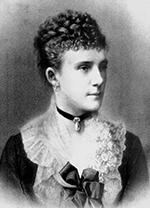
The “formative years” of the Gymnasium: the Cathedral of Enlightenment

 Upon entering the Gymnasium, one will surely meet the sight of the portrait of Eugenia of Oldenburg welcomingly hanging on the wall. This woman is the patroness of our Gymnasium, the founder of the school and the person Gymnasium is named after. Her family tree dates us back to her grandfather, Nicholas I, and her father’s stepfather, Napoleon Bonaparte.

 As a descendant of two royal families, she always did everything as a queen would do: with confidence and vigor. So, when in 1868 she founded the Gymnasium, she invested all the efforts to make the place as perfect as she wanted it to be, taking an active part in everyday life of the Gymnasium and developing school curriculum in the new subjects, like Hygiene or the First Aid.
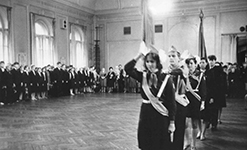
 In September 1901, the official school year was started in the new building. One of the contemporary magazines named it “the Cathedral of Enlightenment”.


1917-1941: New country, new ideas, new enthusiasm!

The October Revolution was truly a time for new aspirations. Under the red Revolutionary flag, it was a time to bring a change to the people, and the Gymnasium was no exception. The former Gymnasium for girls was transformed into a united labor school. Since that time, the school became a mixed one: both boys and girls from working-class families could study and broaden their horizons there.

 A special attention was paid to the labor and physical education: diverse sections were organized within the school to promote the importance of having sound mind and body. Still, the core of the school remained untouched: more than a half of the staff and teachers had been working here before the October of 1917.
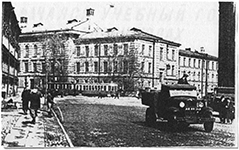
 In the pre-war time, much attention was given to the patriotism. For that reason the majority of students of High school joined the army voluntarily to defend Motherland in the World War II.


1941-1944: The time of hardship and the time of heroism

The siege of Leningrad. A fight for one of the last bulwarks opposing the tide of fascism. The harrowing dread of the airplanes above was not yet to retreat, and the city had to hold on for 3 more years. The students of school # 157 were evacuated from the besieged city. The 8th Artillery School now was located in the building.

 The cadets, as everybody else in the city, carried the bulk of defense. They patrolled streets of the Smolny district, guarded the building of our school, and extinguished fires. Many of them sacrificed their lives. A heroic exploit was performed by Yury Gapeev near the suburb of Leningrad. Surrounded, he took the last grenade and blew himself up with the enemy soldiers.

As the resources were shrinking, the cadets had to combat famine and frost. On the 8th of February 1942, the cadets were finally evacuated from the besieged Leningrad.

 In spring of 1942 the staff and teachers started to prepare the school for the new school year. They had to repair all what was shattered by splinters of bombs and fire. Once a 52-kg bomb hit the roof of the school, but fortunately failed to explode. A mournful list of 15 surnames of teachers and school staff, who passed away during the siege days, tells us the grim story of those days.

1944-1965: Walking with the time

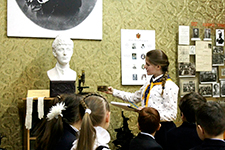
The time heals all wounds. And time, coupled with optimism and enthusiasm, heals twice as effective. Anatoly Isaev, the new headmaster of the school, has proven it only too clearly. Ruling the school for 21 year, he dedicated all his efforts to his mission just as Eugenia of Oldenburg did a century before. Even his flat, part of which is restored for the school museum, was situated inside this building.

After the lifting of the siege school life came to order very quickly. In 1944 the school became the one for boys. In 9 year time, the doors of the school were opened up for girls as well. The goal of Anatoly Isaev was not only to restore the school, but to make its curriculum modern and cutting-edge. So, since 1963, a special heed was paid to learning English. “Isaevskaya” school used to be one of the best schools in Leningrad, and it was for a reason.


1965-p.d: Commitment to the traditions, openness to the world

The 21 years of Anatoly Isaev have shaped the school. The sound command of English enabled the students to found the Club of International Friendship. They kept in touch with students all across the globe, writing letters and receiving small packages from their pen friends.

  After Perestroika the relationships with foreign countries have been enlivened. In 1990, the first group of students from our school paid a visit to the city of Palmyra, Pennsylvania. There were exchange programs with schools from Genoa, Minsk and Oldenburg.  exc

In the spring of 1997 the 1st Saint-Petersburg Model United Nations Conference was held. The tenth anniversary conference brought together 750 students from 14 countries of the World. 

In 1999 the school regained its historical name and became “The Gymnasium named after Princess Eugenia of Oldenburg”. 


Contacts

Gymnasium 157 named after Princess of Oldenburg

 1, Lafonskaya street, St. Petersburg, Russian Federation, 191124 

Tel.:  +7-812-417-21-22, https://vk.com/gymnasium157

SPIMUN Secretariat: spmun@yandex.ru

SPIMUN history

History of SPIMUN

In Russia, the first school level model of the United Nations was established in the city of Ivanovo. The first Saint Petersburg International Model United Nations conference was held in March 1997 on the initiative of Dmitry Polivyanny, the professor at Ivanovo State University, and Natalia Rychkova, the assistant headmaster of Gymnasium 157.

SPIMUN started as a small 3-day simulation of the ECOSOC and was represented by 75 delegates from Athens, Geneva, The Hague, Zurich, Ivanovo, and Saint Petersburg MUN groups.

The 10th anniversary SPIMUN brought together about 700 delegates and teachers from 14 countries of the World. The TV channel «100» presented a 40-minute program dedicated to our Model UN program.

In 1999, the most active participants of the SPIMUN, I. Zelentsova and M. Nazimok, were honored to meet the UN Secretary General Kofi Annan.

Over the past 30 years, schools from many countries of the World have participated in SPIMUN conferences. The list includes schools from Belarus, Armenia, Australia, Azerbaijan, Bahrain, Belarus, Bosnia and Herzegovina, China, Cyprus, Czech Republic, Egypt, Ethiopia, Finland, Germany, Greece, India, Israel, Italy, Kazakhstan, Kenya, Lebanon, Mexico, Morocco, the Netherlands, Pakistan, Peru, Qatar, Saudi Arabia, Serbia, Singapore, South Africa, Spain, Switzerland, Tunisia, Turkey, United Arab Emirates, the United Kingdom, United States of America.

The Interparliamentary Assembly of the CIS countries provided assistance in organizing the conferences. As a result, the Opening ceremony of several SPIMUN conferences were held at the historic building of Tauride Palace.

The list of former SPIMUN student officers includes Alexander Malich, director of Alexandrinsky Theatre and TV presenter; Tamara Yakovleva, employee of the Ministry of Foreign Affairs; Sergey Bandurko, General Director of a consulting company (PhD in Economics); and Svetlana Krivokhizh, Head of the Department of International Relations and Political Processes in Asia and Africa at the Institute of Oriental Studies at the Higher School of Economics in St. Petersburg (PhD in Historical Sciences).

SPIMUN allows students to play the roles of diplomats and to learn to negotiate and debate in a formal way. The objectives of the conference are to seek through negotiation solutions to the various problems of the world dealing with economic, social, environmental, and cultural issues. The young delegates in seeking solutions to these problems can learn to develop true international cooperation. 


SPIMUN Agenda 2026

SPIMUN Agenda 2026 and Annotations

1st Committee (Human Rights)

The impact of artificial intelligence (AI) on cultural rights

2nd Committee (Environmental & Cultural)

Implementation of sustainable tourism as a way to protect natural and cultural heritage sites

ECOSOC (Economic and Social Council)

The role of youth in localizing sustainable development

Shanghai Cooperation Organization (SCO) 


To download an annotation to an issue of the Agenda, just click this particular issue


About us

ABOUT US

St. Petersburg International Model United Nations is one the oldest school-level MUN conferences in Russia. Since 1997, the conferences have been organized by Saint Petersburg Gymnasium #157. Our Gymnasium was founded by Princess of Oldenburg in 1868 and is located in a historic building in a picturesque center of the city.

For three decades SPIMUN has been inviting high school students to discuss actual and important issues concerning economic, social, environmental and cultural spheres.

The young delegates, in seeking solutions to these problems, can learn to defend their position in a constructive way and at the same time to cooperate and reach compromise. Model UN is a project that develops leadership and teamwork skills.

In the process of preparation for the annual conferences, students learn about the history, structure, main activities of the UN. They study the basics of parliamentary procedure and learn how to debate.

The official language of SPIMUN is English, and international conferences provide good practice for those who are studying the language at an advanced level.

The Organizing Committee of SPIMUN consists of teachers, graduates, and active students of Gymnasium # 157.

To learn more about SPIMUN and to express your interest in participation, please, contact the Organizing Committee via email: spmun@yandex.ru


Around the Gymnasium

What can you see walking around the Gymnasium?

The Kikin Hall 

The luxurious mansion was built for Peter the Great associate Alexander Kikin. Unfortunately, Kikin failed to live there for a long time: in 1718 he was executed. By the order of Peter I the Kunstkammer (the chamber of curiosities) - the first museum in Russia - was started there. The collection includedcoins and medals, anatomic preparations, botanic and zoological rarities, archeological artifacts.  

The Tzar himself used to show them to the nobility and foreign guests. However, common people were afraid of visiting the Kunstkammer. So, it was decided to treat each visitor either with a cup of coffee or a glass of vodka or wine. Bread and butter were served in addition. Nowadays the Kikin Hall houses a musical lyceum.


Смольный собор ночью Smolny Nunnery and Smolny Cathedral


The name Smolny derives from the location - in the early days of St. Petersburg the place at the edge of the city where pitch (smola in Russian) was processed for use in shipbuilding and maintenance. As a result, it was called smolny - the place of pitch.

The daughter of Peter the Great, Empress Elizaveta Petrovna, decided to spend her old age in the peace of a nunnery. She ordered to build the nunnery for one hundred and twenty nuns and herself as their Mother Superior. The Smolny nunnery was built, but eventually, the Empress gave up her wish to become a nun. The convent main church, a blue-and-white building, is considered to be one of the architectural masterpieces of the Italian architect Francesco Rastrelli.


Smolny Institute

In the XIXth - at the beginning of XXth century this building housed the Smolny institute for noble maidens - a private educational establishment for girls from noble families. After the monarchy failed to exist in 1917 the building was occupied by Bolsheviks - the supporters of Vladimir Lenin. It was turned into the headquarters of the Revolution. The first in the USSR monument to Lenin was erected in front of the Smolny. During the Siege of Leningrad, the building of Smolny Institute served as the city defense headquarters. Now Smolny houses the Administration of St. Petersburg.


Bridge of Peter the Great

The construction of the bridge was fascilitated by a tragic event. In spring of 1907 the ferry, which was crossing the river with passengers on board, overturned and sank. The foundation ceremony took place in honor of the bicentenary of Poltava battle on 26 June, 1909. Therefore, the bridge was named to commemorate the winner of the battle - the Emperor Peter the Great. The legend says that one of the bridge clinches was made of pure gold and painted the same color as the others. 

Frequently Asked Questions

How do we register to participate in the conference?

Press Registration on our website. You will need to provide information about your school, approximate number of delegates in your group, and a list of countries (up to 10) your delegates want to represent. For detailed information about the registration process, please, see Steps to participation


Who is allowed to participate?

SPIMUN is designed for high-school students (14-19 years old). 


Is individual participation possible?

Unfortunately, no. Only school groups accompanied by teachers (MUN Directors and/or Chaperons) are allowed to participate. 


How many people can be there in a school delegation?

The number of delegates in a school group should be from 3 to 20 (if your numbers differ, please, contact us anyway).


What language conference meetings are held in?

The official language of the conference is English - to ensure international participation and language practice for those who study it as a second language. 


What do delegates need to do to prepare for the conference?

To be approved as a representative of the country in one of the Committees and to be able to participate in the conference effectively take the following steps:

  1. Conduct a country research to be able to represent a UN Member State as if you were its diplomat
  2. Study the issues of the agenda of the chosen committee
  3. Prepare a draft resolution on one or two issues of the agenda according to the requested format
  4. Study the Rules of Procedure and the Program of Events
  5. *Optional. Prepare an Opening Speech on behalf of the represented Member State


Is it possible to organize a cultural program for foreign participants?

Yes, the cultural program for foreign participants is usually organized by our tour partners. For detailed information please contact the Secretariat (spmun@yandex.ru). 

О Модели ООН

Санкт-Петербургская Модель ООН

На базе гимназии 157 с 1997 года действует международная программа дополнительного образования старших школьников «Модель Организации Объединенных Наций». Главное мероприятие программы – ежегодная мартовская конференция, проводимая на английском языке. Конференция проходит в форме ролевой игры, в которой делегаты из разных школ выступают в роли дипломатов ООН.

В 2025 году делегаты моделировали деятельность Комитета по правам человека, Экологического и культурного комитета и Экономического и Социального Совета ООН.

Участие в подготовке и работе конференции позволяет ученикам приобрести новые знания, научиться конструктивно отстаивать свою позицию, улучшить коммуникативные навыки, проявить лидерские качества, повысить уровень владения иностранным языком.

Работа программы реализует одно из основных направлений «Движения Первых» - «Дипломатия и международные отношения».

С 2020 года конференции проводятся под эгидой Межпарламентской Ассамблеи государств - участников СНГ.

Мы приглашаем педагогов и школьников 9-11-х классов принять участие в работе «Модели ООН».

About SPIMUN in Russian

Санкт-Петербургская Модель ООН

На базе гимназии 157 с 1997 года действует международная программа дополнительного образования старших школьников «Модель Организации Объединенных Наций». Главное мероприятие программы – ежегодная мартовская конференция, проводимая на английском языке. Конференция проходит в форме ролевой игры, в которой делегаты из разных школ выступают в роли дипломатов ООН.

В 2025 году делегаты моделировали деятельность Комитета по правам человека, Экологического и культурного комитета и Экономического и Социального Совета ООН.

Участие в подготовке и работе конференции позволяет ученикам приобрести новые знания, научиться конструктивно отстаивать свою позицию, улучшить коммуникативные навыки, проявить лидерские качества, повысить уровень владения иностранным языком.

Работа программы реализует одно из основных направлений «Движения Первых» - «Дипломатия и международные отношения».

С 2020 года конференции проводятся под эгидой Межпарламентской Ассамблеи государств - участников СНГ.

Мы приглашаем педагогов и школьников 9-11-х классов принять участие в работе «Модели ООН».